
What Happens If You Blow Your Nose Too Hard?
Blowing your nose too forcefully can increase pressure in the nasal passages and sinuses, which may contribute to discomfort, irritation, or temporary ear pressure. In some cases, excessive force may worsen nasal swelling or cause small blood vessels inside the nose to become irritated. At Elite Primary Care Group, Dr. Fahima Azizi, MD and Dr. Rita Kapoor, MD, offer comprehensive primary care support for individuals experiencing common health concerns in Frederick, MD. Our team evaluates symptoms, provides personalized recommendations, and helps patients maintain better overall health through preventive and ongoing care. For more information, contact us or schedule an appointment online. We are conveniently located at 801 Toll House Avenue, Suite E1, Frederick MD 21701.
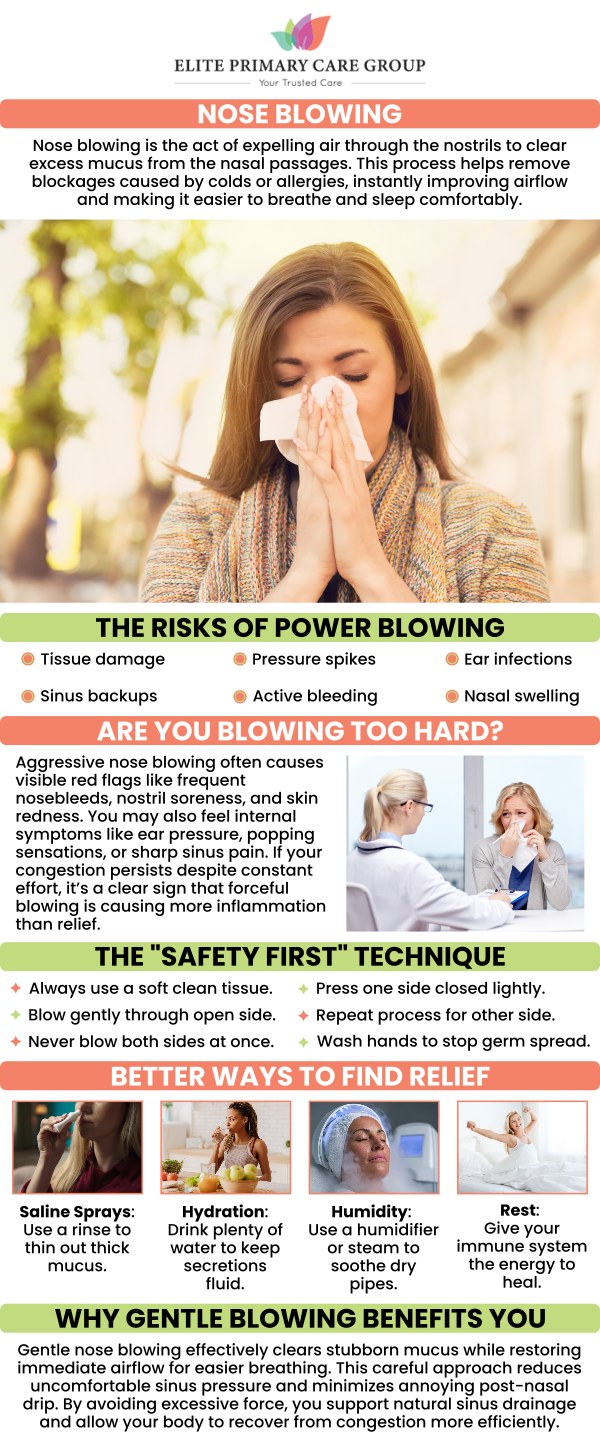

Table of Contents:
Can blowing your nose too hard cause a nosebleed?
Can blowing your nose too hard cause a headache?
Why can blowing your nose too hard make you feel dizzy?
When should you see a doctor after blowing your nose too hard?
Get Medical Guidance for Nose and Sinus Concerns From Dr. Fahima Azizi, MD, and Dr. Rita Kapoor, MD at Elite Primary Care Group in Frederick, MD
Blowing your nose too hard can sometimes cause a nosebleed because excessive pressure may irritate or damage the small, delicate blood vessels inside the nasal passages. The lining of the nose contains many tiny blood vessels that can become more sensitive when affected by dryness, allergies, congestion, or frequent irritation. Using too much force while trying to clear mucus may cause these vessels to break, resulting in minor nasal bleeding.
Nosebleeds caused by forceful nose blowing are usually mild and may stop with simple measures, such as sitting upright, leaning slightly forward, and applying gentle pressure to the soft part of the nose. To help prevent irritation, it may be helpful to blow your nose gently, avoid repeated forceful blowing, and keep nasal passages comfortable when experiencing congestion. Persistent or heavy nosebleeds should be evaluated by a healthcare professional.
At Elite Primary Care Group in Frederick, MD, Dr. Fahima Azizi, MD, and Dr. Rita Kapoor, MD, provide personalized medical guidance for patients experiencing nose, sinus, and respiratory concerns. Our team can help evaluate recurring nosebleeds, identify possible contributing factors, and recommend appropriate care to support your overall health and comfort.
Blowing your nose too forcefully can sometimes contribute to headaches by creating sudden pressure changes in the nasal passages, sinuses, and surrounding areas. When you apply excessive force while trying to clear congestion, the increased pressure may irritate sensitive tissues and worsen discomfort, especially if you already have sinus congestion, allergies, or a respiratory illness. This pressure buildup can lead to a feeling of fullness or aching around the forehead, cheeks, or areas near the eyes.
Forceful nose blowing may also affect the connection between the nose, sinuses, and ears. Increased pressure can temporarily impact the Eustachian tubes, which help balance pressure in the middle ear, potentially causing additional discomfort or a sensation of pressure that contributes to headache symptoms. In some cases, repeated aggressive nose blowing may irritate nasal tissues and increase the chance of nosebleeds or localized soreness.
To reduce the risk of headaches and irritation, it is generally recommended to blow your nose gently and clear one nostril at a time rather than using excessive force. At Elite Primary Care Group in Frederick, MD, Dr. Fahima Azizi, MD, and Dr. Rita Kapoor, MD, provide personalized medical guidance for patients experiencing sinus, nasal, and headache concerns. Our team can evaluate ongoing symptoms, identify possible causes, and recommend appropriate care based on your individual health needs.
Blowing your nose too hard can sometimes cause temporary dizziness because it creates sudden pressure changes in the nasal passages, sinuses, and ears. Forceful exhaling may affect the Eustachian tubes, which help regulate pressure between the middle ear and the back of the throat. When this pressure balance is briefly disrupted, it can affect the signals involved in maintaining balance and may lead to a short episode of lightheadedness or dizziness.
People who are already experiencing congestion, sinus pressure, or respiratory symptoms may be more likely to notice these effects. Strong nose blowing can also temporarily increase pressure in the head and may contribute to discomfort, ear fullness, or a brief feeling of imbalance. In most cases, these sensations improve once the pressure normalizes, but recurring or severe dizziness should be discussed with a healthcare professional.
At Elite Primary Care Group, Dr. Fahima Azizi, MD, and Dr. Rita Kapoor, MD, provide personalized medical guidance for patients experiencing sinus, nasal, and dizziness-related concerns in Frederick, MD. Our team helps evaluate symptoms, identify possible causes, and recommend appropriate care approaches to support overall health and comfort.
Blowing your nose too forcefully may sometimes cause irritation, discomfort, or temporary changes in your nasal passages. While mild symptoms often improve on their own, certain signs may require medical attention. At Elite Primary Care Group, Dr. Fahima Azizi, MD, and Dr. Rita Kapoor, MD, recommend seeking evaluation if you experience persistent, severe, or unusual symptoms after forceful nose blowing.
You should consider contacting a healthcare professional if you notice:
• Significant nosebleeds: If you experience heavy bleeding or a nosebleed that does not stop after applying gentle pressure for 10 to 15 minutes, medical evaluation may be needed to determine the cause and provide appropriate guidance.
• Severe pain or swelling: Intense facial pain, swelling, pressure, or a sudden headache after blowing your nose too hard may require evaluation to identify possible sinus-related concerns or other nasal issues.
• Clear, persistent nasal discharge: A continuous clear, watery fluid draining from the nose, especially after a head injury or significant pressure, should be evaluated promptly by a healthcare professional.
• Ongoing nasal symptoms: Persistent congestion, trouble breathing through the nose, or changes in your sense of smell may indicate an underlying condition that needs further assessment and personalized care.
At Elite Primary Care Group in Frederick, MD, our team provides medical guidance for nose and sinus concerns, helping patients understand their symptoms and receive appropriate care recommendations based on their individual health needs.
Dr. Fahima Azizi, MD and Dr. Rita Kapoor, MD, provide personalized medical guidance for patients experiencing nose and sinus concerns, including nasal discomfort, congestion, pressure, irritation, and other related symptoms. Our physicians focus on understanding each patient’s symptoms, health history, and individual needs to help identify appropriate care options and provide recommendations that support better respiratory health.
At Elite Primary Care Group in Frederick, MD, our team offers comprehensive evaluations and ongoing support for a variety of health concerns. Dr. Fahima Azizi, MD, and Dr. Rita Kapoor, MD, help patients understand their symptoms, determine when additional evaluation may be needed, and develop a personalized care approach focused on comfort, wellness, and long-term health.
For more information, contact us or schedule an appointment online. We are conveniently located at 801 Toll House Avenue, Suite E1, Frederick MD 21701. We serve patients from Frederick MD, Mt Pleasant MD, Braddock Heights MD, Walkersville MD, Lewistown MD, Urbana MD, Ballenger Creek MD, and surrounding areas.

Check Out Our 5 Star Reviews


Additional Services You May Need
▸ Annual Physical Exam
▸ Immigration USCIS Exam
▸ Chronic Care Management
▸ Medical Testing
▸ Employment Physical Exam
▸ Sports Physical Exam
▸ PPD Skin Testing
▸ Drug & Substance Testing
▸ Zepbound
▸ Sick Visit
▸ Influenza A & B Testing
▸ Pap Smear

Additional Services You May Need
▸ Annual Physical Exam
▸ Immigration USCIS Exam
▸ Chronic Care Management
▸ Medical Testing
▸ Employment Physical Exam
▸ Sports Physical Exam
▸ PPD Skin Testing
▸ Drug & Substance Testing
▸ Covid-19 Testing
▸ Vaccinations
▸ In-house Testing
▸ Women’s Health
▸ Remote Patient Monitoring
▸ Medical Weight Loss Management
▸ Colds & Flu
▸ Sore Throat
▸ Ear Infections
▸ Allergies
▸ High Cholesterol
▸ Diabetes
▸ Hypertension
▸ Common Infections
▸ Ozempic
▸ Wegovy
▸ Zepbound
▸ Mounjaro
▸ Sick Visit
▸ Tuberculosis Screening
▸ Influenza A & B Testing
▸ EKG Testing
▸ PCR Covid Testing
▸ RSV Testing
▸ Pap Smear
▸ WegovyHD