
You cannot copy content of this website, your IP is being recorded
When to See a Doctor for an Ear Infection

When to See a Doctor for an Ear Infection

If you experience symptoms like persistent ear pain, fluid drainage, or fever, it’s important to see a doctor for an ear infection. While mild cases may improve with home care, more severe or ongoing symptoms can indicate a need for medical intervention. Seeing a doctor early can help prevent complications, such as hearing loss or the spread of the infection. Dr. Fahima Azizi, MD, and Dr. Rita Kapoor, MD, at Elite Primary Care Group in Frederick, MD, are here to provide prompt care and determine the most effective treatment for your ear infection. For more information, contact us or schedule an appointment online. We are conveniently located at 801 Toll House Avenue, Suite E1, Frederick MD 21701.
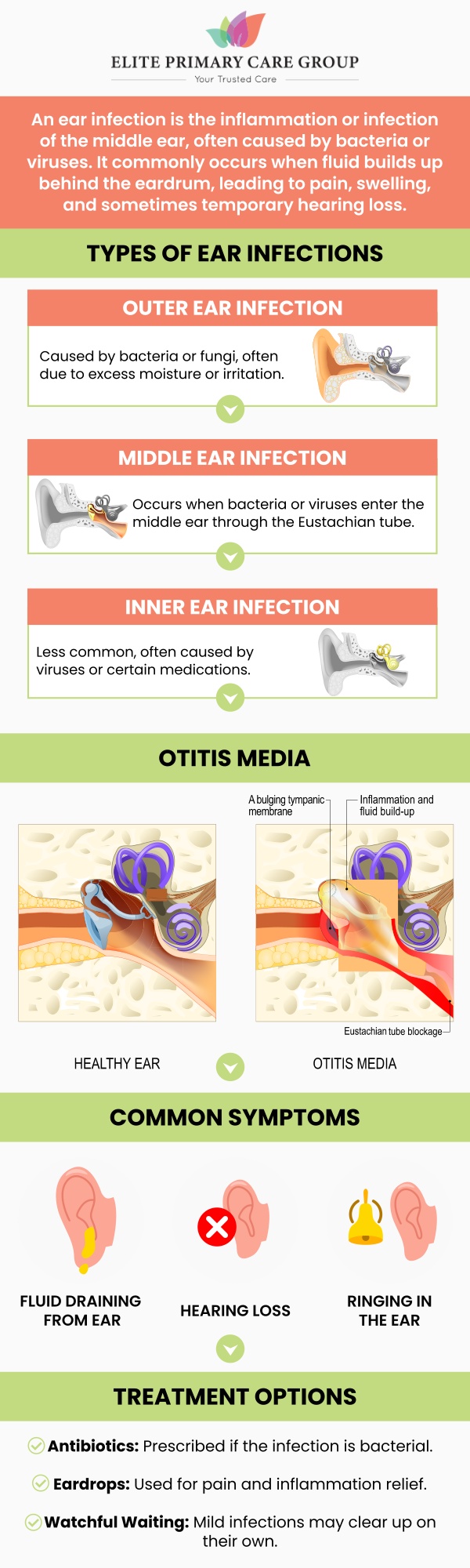
If you experience symptoms like persistent ear pain, fluid drainage, or fever, it’s important to see a doctor for an ear infection. While mild cases may improve with home care, more severe or ongoing symptoms can indicate a need for medical intervention. Seeing a doctor early can help prevent complications, such as hearing loss or the spread of the infection. Dr. Fahima Azizi, MD, and Dr. Rita Kapoor, MD, at Elite Primary Care Group in Frederick, MD, are here to provide prompt care and determine the most effective treatment for your ear infection. For more information, contact us or schedule an appointment online. We are conveniently located at 801 Toll House Avenue, Suite E1, Frederick MD 21701.


Table of Contents:

How can I tell if I have an ear infection?
How is an ear infection diagnosed?
How long does it take for an ear infection to heal?
What should I do if my ear infection doesn’t improve?
Ear Infection Worsening? Here’s When to See Dr. Fahima Azizi, MD, and Dr. Rita Kapoor, MD for Treatment

How can I tell if I have an ear infection?


At Elite Primary Care Group, your health and comfort are our top priorities. If you suspect you or a loved one may have an ear infection, it’s important to recognize the warning signs so you can get prompt, professional care.

Here are some common signs that you may have an ear infection:

Ear Pain or Discomfort
A sharp or dull pain inside the ear is a common symptom of an ear infection, which may worsen when lying down or touching the ear.

Drainage from the Ear
Fluid or pus draining from the ear, which can be yellow or green in color, may indicate an infection.

Hearing Loss
A feeling of fullness or difficulty hearing from the affected ear can occur due to fluid buildup or pressure behind the eardrum.

Fever
A mild to moderate fever may accompany an ear infection, especially in more severe cases.

Balance Problems
If the infection affects the inner ear, you may experience dizziness or problems with balance.

Pressure or Fullness in the Ear
A sensation of pressure or fullness in the ear can indicate fluid buildup in the middle ear.

If you notice persistent ear pain, discharge, hearing loss, or fever, don’t wait—schedule an appointment with Elite Primary Care Group. Early evaluation by our experienced medical team is especially important for anyone with recurrent ear infections or patients with severe symptoms. We’ll provide a thorough assessment and a personalized treatment plan to get you feeling better quickly.

How is an ear infection diagnosed?


At Elite Primary Care Group, our experienced providers are dedicated to delivering thorough and compassionate care for patients experiencing ear infections. An ear infection is typically diagnosed through a physical examination by a healthcare provider. The doctor will begin by reviewing your medical history and asking about your symptoms, such as ear pain, drainage, or hearing loss.

They will then use an otoscope, a small device with a light, to look inside the ear canal and examine the eardrum for signs of infection, such as redness, swelling, or fluid buildup. The presence of fluid or pus behind the eardrum can indicate an infection, and the doctor will assess the severity to determine the appropriate treatment.

Based on the findings, your healthcare provider will recommend a treatment plan to help you recover effectively. At Elite Primary Care Group, our approach to diagnosing ear infections is comprehensive and patient-focused, ensuring you receive the most accurate diagnosis and effective treatment plan.

How long does it take for an ear infection to heal?


At Elite Primary Care Group, we understand that ear infections can be uncomfortable and concerning. The healing time for an ear infection depends on several factors, including the type and severity of the infection, as well as your overall health and age.

The duration of an ear infection’s healing depends on the type and severity of the infection. For mild cases, symptoms such as pain and swelling typically begin to improve within a few days of treatment, particularly if antibiotics are prescribed. Most ear infections, whether they are caused by bacteria or viruses, generally clear up within one to two weeks. However, the recovery time can vary, and in some cases, it may take longer if the infection is more severe or if complications develop, such as a ruptured eardrum or fluid buildup behind the eardrum.

It’s important to follow your healthcare provider’s treatment plan carefully and attend any recommended follow-up appointments to monitor progress. Even if symptoms improve, finishing the prescribed medication is essential to fully eliminate the infection. If symptoms persist beyond the typical healing period or worsen, it may indicate that further medical intervention is needed.

What should I do if my ear infection doesn’t improve?


If your ear infection doesn’t improve after a few days of home treatment, it may be a sign that the infection is more severe or requires a different treatment approach. Common symptoms that suggest your ear infection is not improving include persistent or worsening pain, fluid draining from the ear, fever, or hearing loss. If you experience any of these signs, it is important to seek medical attention promptly to prevent further complications such as damage to the ear or spread of the infection.

In some cases, an untreated ear infection can lead to complications like a ruptured eardrum or, in more severe cases, an infection that spreads to nearby tissues. A healthcare provider may need to assess the infection to determine if antibiotics or even more specialized treatments are necessary. They may also conduct tests, such as a hearing test or imaging, to rule out other underlying issues that could be causing your symptoms.

At Elite Primary Care Group, Dr. Fahima Azizi, MD, and Dr. Rita Kapoor, MD, offer expert care for ear infections and are committed to providing effective treatment for any complications. If your ear infection isn’t improving, their team will evaluate your condition, provide the necessary medication, and guide you through the next steps to help you heal.

Ear Infection Worsening? Here’s When to See Dr. Fahima Azizi, MD, and Dr. Rita Kapoor, MD for Treatment


If you’re experiencing a worsening ear infection, it’s important to seek professional medical care from Dr. Fahima Azizi, MD, and Dr. Rita Kapoor, MD, at Elite Primary Care Group. Both doctors are highly experienced in diagnosing and treating ear infections, ensuring you receive the most effective and timely care. If you notice symptoms such as increased pain, drainage from the ear, fever, or difficulty hearing, it’s a clear sign that your infection may require immediate attention. Dr. Azizi and Dr. Kapoor will conduct a thorough evaluation to determine the severity of the infection and provide a personalized treatment plan.

Dr. Azizi and Dr. Kapoor are dedicated to offering compassionate, patient-centered care. If your ear infection worsens, they can provide prescription medication, such as antibiotics or pain relievers, and offer guidance on at-home care to help you recover quickly. Their expertise in treating ear infections ensures that you’ll receive the appropriate care and follow-up to prevent complications.

For more information, contact us or schedule an appointment online. We are conveniently located at 801 Toll House Avenue, Suite E1, Frederick MD 21701. We serve patients from Frederick MD, Mt Pleasant MD, Braddock Heights MD, Walkersville MD, Lewistown MD, Urbana MD, Ballenger Creek MD, and surrounding areas.

Check Out Our 5 Star Reviews

Elite Primary Care Group Google Review in Frederick MD